
Calçot Mutante
Info
This zine was commissioned by La Víbria Intercultural. The organization called for a project that could be locally rooted, something that would resonate with both the organisation's network and the wider population of the city. The project is based on local field research.
Year
2026
Client/ University
La Víbria Intercultural
Topic
Climate Futures, Storytelling
The Calçotada is one of Catalonia's most beloved seasonal traditions, a festival built around calçots, a type of long, sweet green onion grown almost exclusively in the region. Families and friends gather outdoors to grill them over open flames, peel back the charred outer layers with their hands, and dip them in salvitxada or romesco sauce.
This Zine imagines a near future in which that tradition has been fractured by climate change. Based on scientific research, it projects a Catalonia where rising temperatures and shifting growing conditions can make it nearly impossible to cultivate calçots in the future: the soil too warm, the seasons too short, harvests devastated by invasive pests and drought. The onion that defined a culture will no longer grow the way it used to.
In response, a new engineered variety has emerged, but it is not equally available to everyone. The zine uses this fictional calçotada of the future as a lens to explore inequality: how climate collapse doesn't erase tradition but transforms it into something that separates, rather than unites. The future calçot becomes a marker of class and generation.
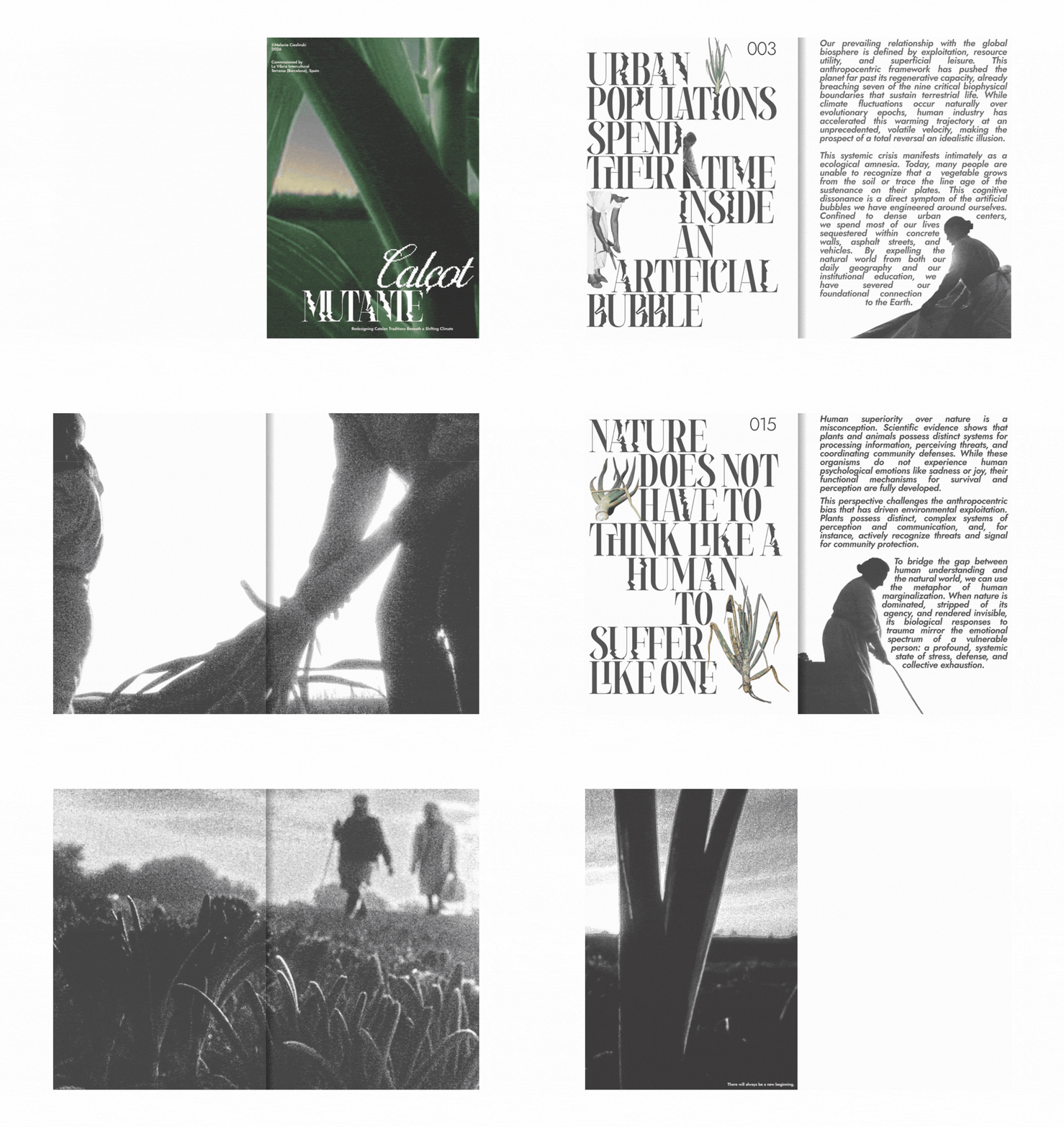


The story is told through two voices: an older woman grieving the world she knew, the cold winters, the smoke, the mess and joy of a proper calçotada, and her girl, a young woman who has grown up in this changed Catalonia and approaches it with openness and even optimism. She has no nostalgia for what was lost because she never lived it.
Their generational dialogue sits alongside fragments of real scientific data and a visit to a local farm, weaving together the emotional and the factual. The result is a piece that holds both perspectives, and asks readers to sit with that tension.
The zine was designed to be accessible to a broad local audience, anyone who has ever attended a calçotada, who has a grandmother who talks about the old way of doing things, or who has felt the summers getting longer. By anchoring a complex conversation in something familiar and beloved, it invites people in rather than lecturing them out.
More works

